
Mycelium-based composites for textile applications
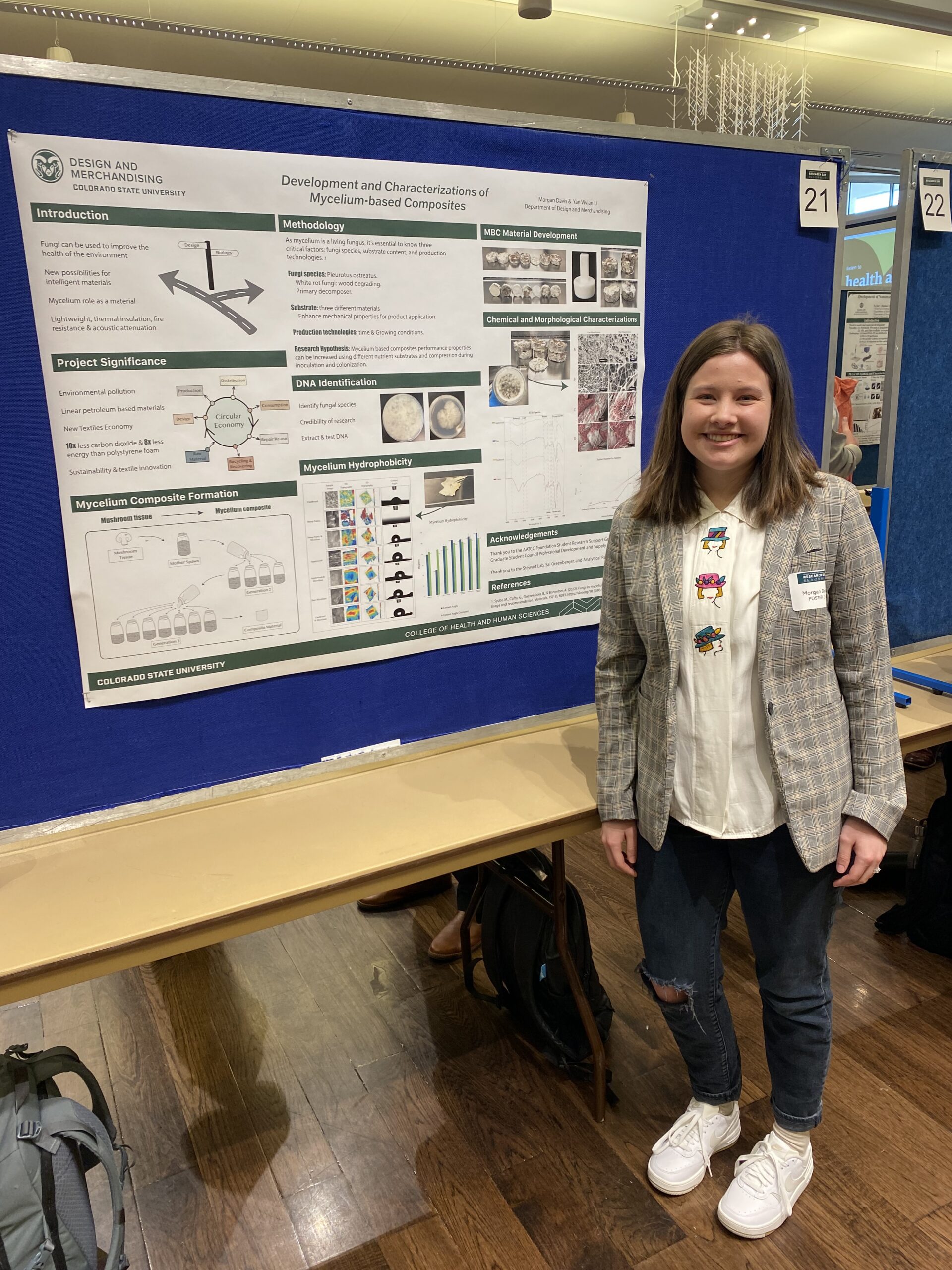
This month’s spotlight shines on Morgan Davis, a CSU alum who pursued an M.S. in Design and Merchandising under the guidance of Prof. Yan Vivian Li as part of her Smart Textiles and Nanotechnology research group. Morgan’s recent publication, “Development and Characterization of Pleurotus fossulatus Mycelium-Based Composites for Biodesigned Textile Applications,” published in ACS Sustainable Chemistry & Engineering, brought together researchers from Design and Merchandising, Agricultural Biology, Biomedical and Chemical Engineering, and the School of Materials Science and Engineering in a truly interdisciplinary effort spanning design, biology, and materials science. Together, the team explored how different substrate materials influence the growth and properties of mycelium-based composites being developed for potential textile applications.
Mycelium, the branching network of fungal fibers that grows beneath mushrooms, has emerged as a promising building block for more sustainable materials. When grown through materials such as agricultural or textile waste, the fungal network acts as a natural binder, creating lightweight, biodegradable composites that can potentially replace more resource-intensive materials. Mycelium-based composites (MBC) are already being explored for applications ranging from packaging and insulation to footwear and textiles, offering an intriguing approach to turning waste streams into useful new materials.

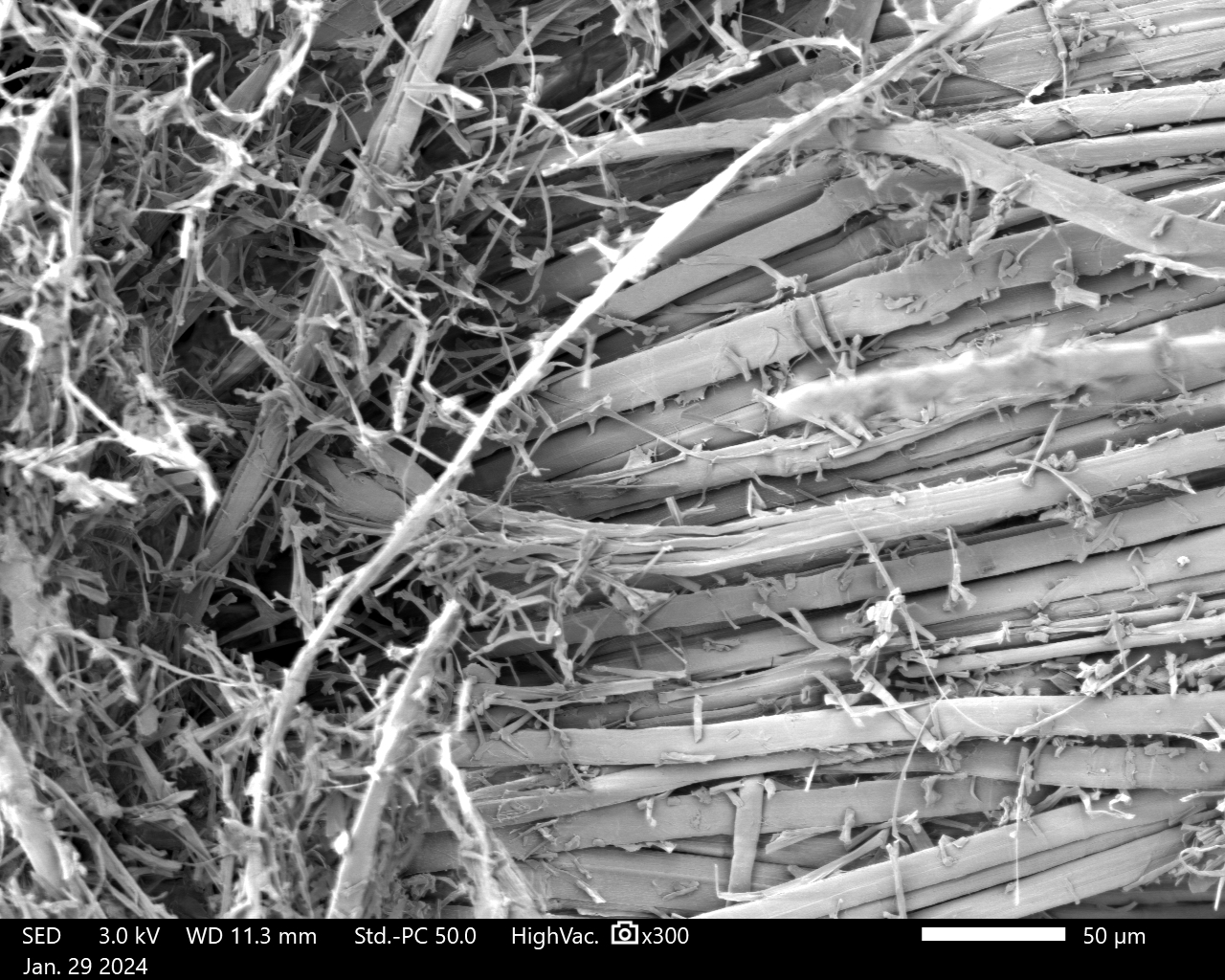
Morgan’s research explored how different substrates (hemp fabric, applewood chips, and cardboard) influence the growth and properties of Pleurotus fossulatus MBC for textile applications. With the utilization of scanning electron microscopy (SEM), the team was able to visualize the three-dimensional network of fungal hyphae and observe how it interacted with each substrate. Morgan and her team found that substrate selection influenced composite development, while mycelial growth increased the water resistance of all materials tested. Together, these findings help researchers better understand how fungal species, substrate choice, and fabrication methods can be tuned to develop mycelium-based materials with useful properties. The ability to grow these composites on materials such as cardboard and hemp also points toward their potential role in a more circular materials economy, where waste products can become inputs for new, biodegradable materials.
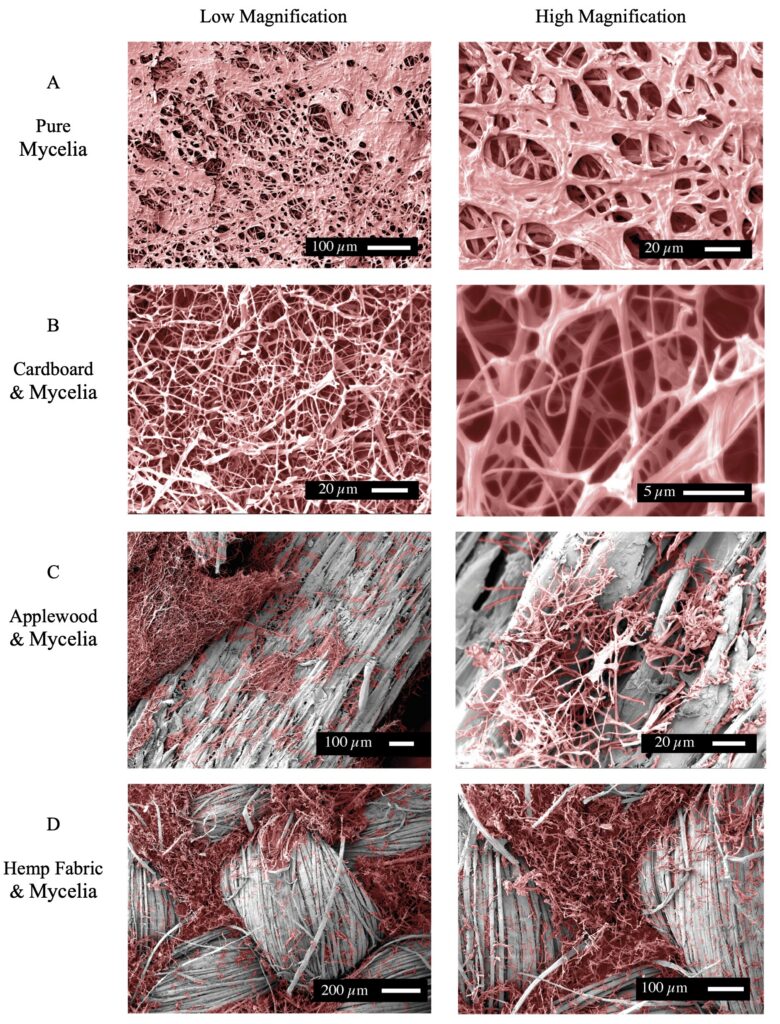
The ARC played an essential role in the project by granting access to advanced instrumentation and training, particularly for the SEM characterization that became a key part of the study. The resulting images allowed Morgan and her collaborators to visualize and measure the microscopic network of fungal hyphae and see how the mycelium grew through and bonded with each substrate. This gave the team a much deeper understanding of the material’s three-dimensional structure and how substrate selection influenced composite development.
Now teaching fashion design and merchandising at Austin Community College in Austin, Texas, Morgan is continuing to explore the intersection of science, technology, and functional apparel design. Her research highlights the value of interdisciplinary collaboration and how ARC resources can help researchers connect biology, materials, and real-world performance to advance sustainable textile innovation.
We look forward to featuring more of our users’ research. Want to have your research in the spotlight? Be sure to cite us by our RRID (SCR_021758) so that we can find you!