
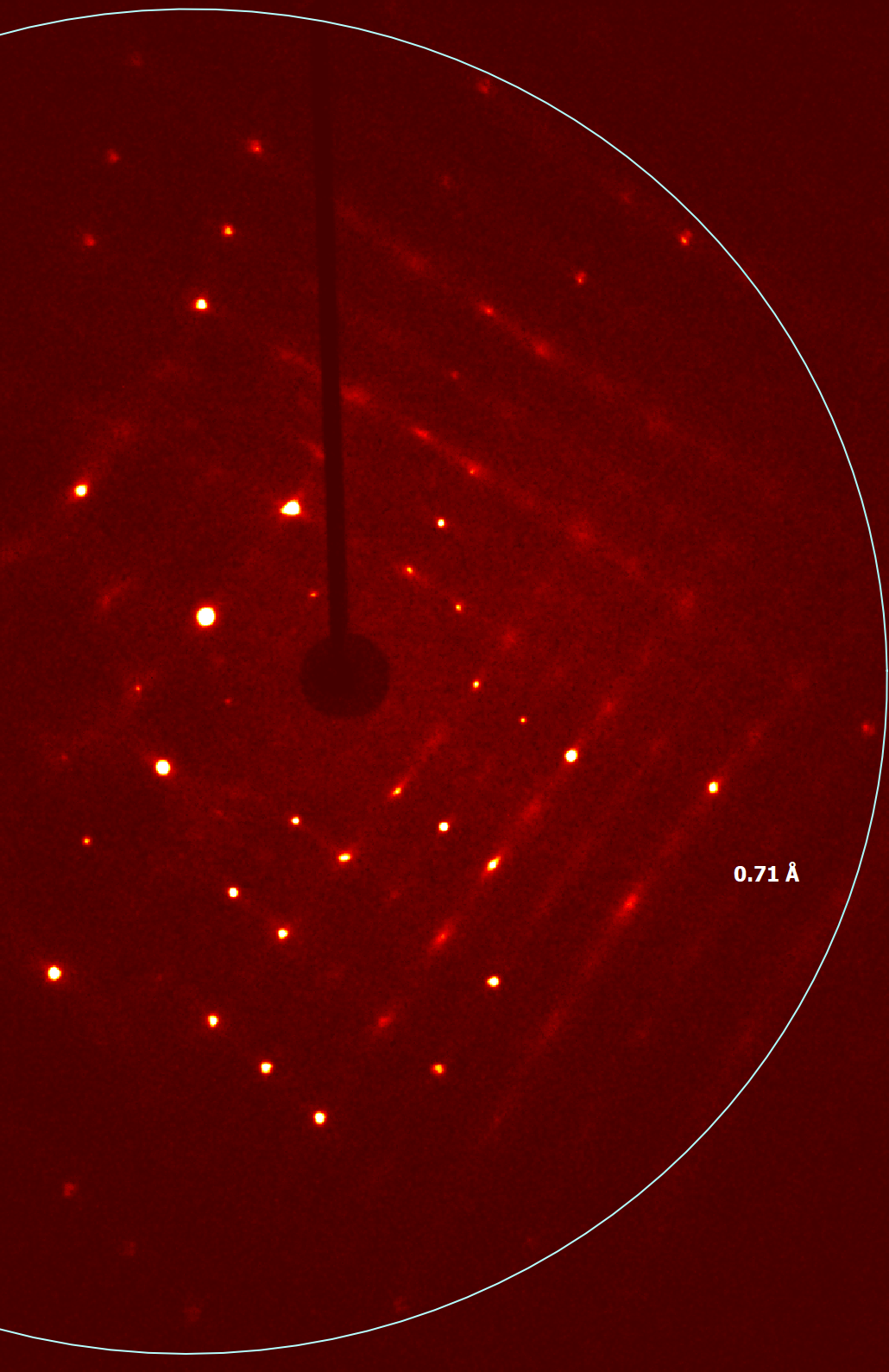
What is one of the biggest advantages of Single Crystal X-ray Diffraction (SC-XRD) compared with Powder X-ray Diffraction (PXRD)?
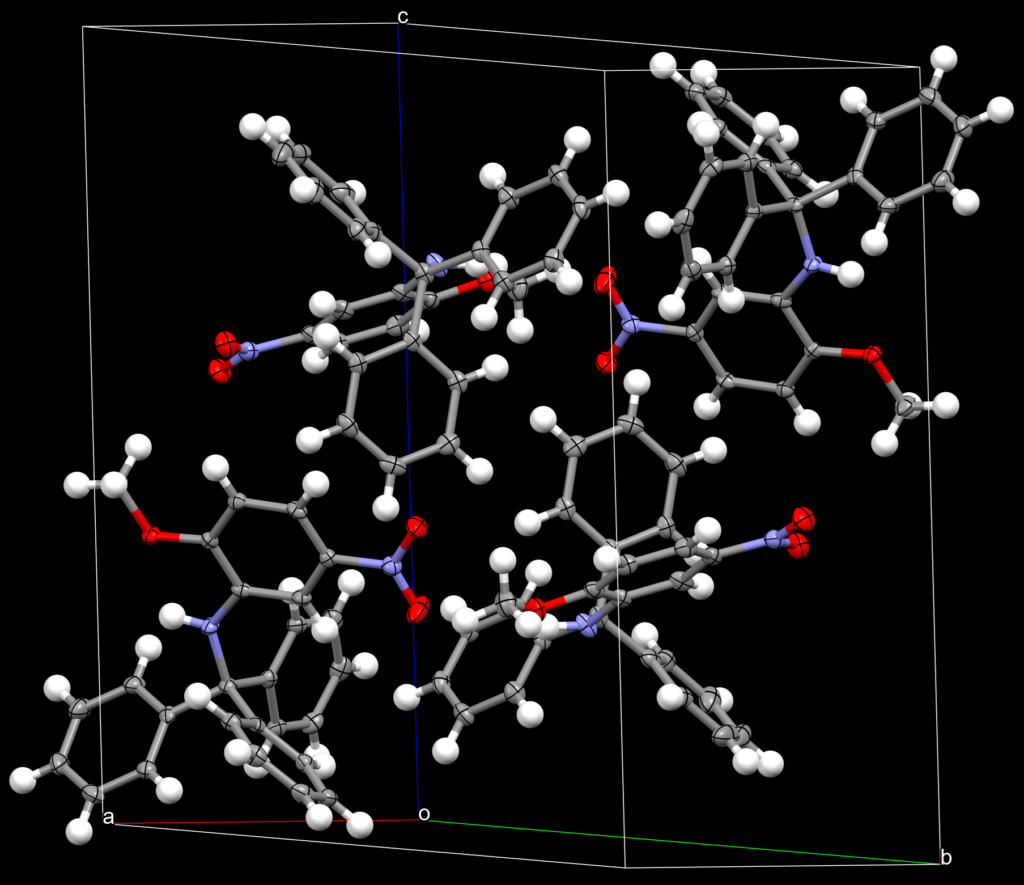
B. SC-XRD can more easily determine the three-dimensional arrangement of atoms within a crystal
In powder XRD, diffraction from many randomly oriented crystallites produces 2D diffraction rings that are often collected as a one-dimensional pattern of intensity versus diffraction angle. This makes PXRD extremely useful for applications such as phase identification, crystallinity, and structural refinement, but overlapping reflections can limit the structural information available.
With SC-XRD, diffraction is collected from an individual crystal fixed in space as it is rotated through different orientations producing a pattern of points in 3D space which is collected on a large area detector, preserving three-dimensional diffraction information. From these data, researchers can determine the crystal’s unit cell dimensions, symmetry, atomic positions, molecular geometry, and crystal packing, providing a detailed 3D view of the average atomic structure of a material.
And speaking of Single Crystal XRD… ARC will soon have a powerful new capability!
Thanks to a recent Federal Appropriations award, ARC will soon be adding a new Single Crystal X-ray Diffractometer (SC-XRD)!
The new system will feature two different X-ray sources and a highly sensitive, large-area detector, greatly expanding the range of crystalline materials that can be analyzed, from organic molecules and coordination complexes to inorganic materials and proteins. The improved sensitivity will also allow researchers to work with smaller crystals, collect higher-quality data, and reduce experiment times. Beyond traditional crystal structure determination, the new instrument will bring advanced capabilities such as diffuse scattering for studying defects and disorder as well as pair distribution function (PDF) analysis for probing local structure. These additions will significantly expand ARC’s structural characterization capabilities and open new research opportunities for users across CSU and the region.
Stay tuned for updates on installation, availability, and training!