
Why Attend AI Day With Microway and NVIDIA?
October 23, 2026; Lory Student Center
Hosted by Microway, NVIDIA, and the Data Science Research Institute, the event brings together faculty, students, and industry leaders to discuss the latest advances in AI and showcase the infrastructures that are making these advances possible.
Don’t miss this chance to hear directly from industry leaders and Colorado State University faculty researchers. This is an opportunity to build new collaborations, while learning how next-generation computing is shaping the future of AI.
Poster session presenters will have the opportunity to win an NVIDIA RTX PRO 4500 Blackwell GPU grand prize!
Event Details
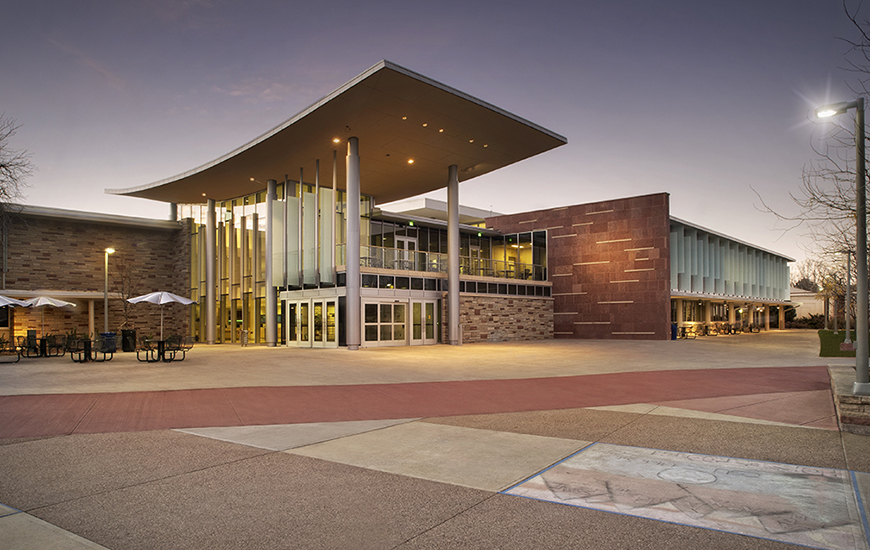
- Location: Longs Peak Room 302 in the Lory Student Center
- Date: October 23, 2026
- Time: Doors open at 8:30.
- Morning Session: 9:00 – 12:00
- Lunch / Poster Session: 12:00 – 1:00
- Afternoon Keynote / Panel: 1:00 – 2:30
- Afternoon Workshops: 3:00 – 5:00
- Registration is required
- Cost: FREE!
Event Agenda
| Morning Session | Topic | Speaker(s) |
| 9:00 | Welcome | Michael Kirby; Director, Data Science Research Institute |
| 9:15-9:45 | AI Day Introduction: Building Productive Research Computing Resources for AI | Brett Newman; VP Customer Engagement, AI and HPC, Microway |
| 9:45-10:15 | Hail-Storm Scope: A Regional High-Resolution Nowcasting System for Hailstorms Built on NVIDIA StormScope Architecture | V. Chandrasekar; University Distinguished Professor, Electrical & Computer Engineering |
| 10:15-10:30 | Break | |
| 10:30-12:00 | CSU AI Research Showcase | Eight Faculty Presenters (list below) |
| 12:00-1:00 | Lunch | |
| Afternoon Session | ||
| 1:00-1:45 | Keynote: How AI is Transforming Weather and Climate Science | Mike Pritchard; Director of Climate Simulation Research, NVIDIA Introduction: Cass Moseley; Vice President for Research |
| 1:45-2:30 | Panel: Building Research and Industry Careers in AI | Panel: NVIDIA, Jared Buckley; Microway, CSU faculty |
| 2:30-3:00 | Break | |
| Afternoon Breakout Workshops | ||
| 3:00-5:00 | Six coinciding workshops covering a range of discussions for both research and computation information technology topics | NVIDIA and Microway |
Afternoon Workshops
Information Technology Focused Workshops: LSC Room 322
- 3:00-3:30 – NVIDIA Session; Profiling and Optimizing AI/HPC Applications with NSight – NVIDIA Solutions Architect
- 3:30-4:15 – Pilots, Early Production, and Scaling up AI on Campus – Microway Team
- 4:15-5:00 – Parallel Filesystems with AI Workloads: BeeGFS at Colorado State University – Jared Buckley, Solutions Architect, Microway
Faculty Focused Workshops: LSC Longs Peak Room 302
- 3:00-3:45 – Using Open OnDemand for Mixed AI & HPC Clusters – Jared Buckley, Solutions Architect, Microway
- 3:45-4:15 – Trends in AI Computing Proposals and Creating Successful AI & GPU NSF Grants, Brett Newman, VP Customer Engagement, AI and HPC, Microway
- 4:15-5:00 – NVIDIA Agentic AI Workshop – NVIDIA Solutions Architect
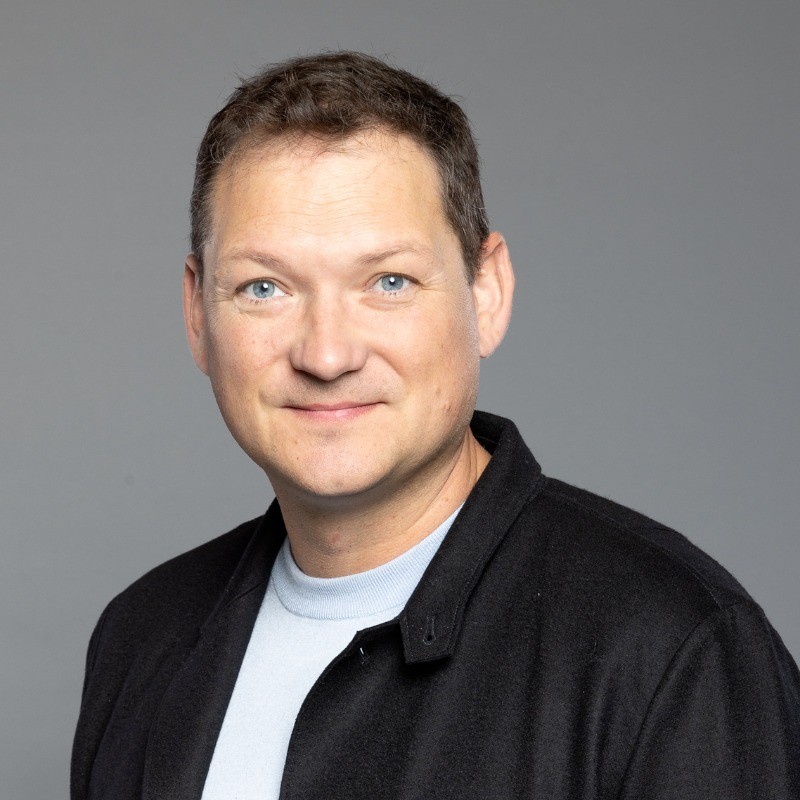
Keynote: How AI Is Transforming Weather and Climate Science
Mike Pritchard
Director of Climate Simulation Research, NVIDIA
Keynote Abstract
Weather and climate shape our lives and economies but are scientifically difficult to predict. Historically, progress relied on translating the laws of physics into computer simulations, solving a mixture of time-dependent equations and assumption-prone empirical relationships describing sub-grid processes.
Today, artificial intelligence is opening a new chapter—not by replacing physics or scientists, but by giving us powerful new ways to learn from observations, explore uncertainty, simulate our planet, and interact with simulation output.
This keynote will provide a tour of the rapidly changing frontier of AI for weather and climate, from global AI forecasts and storm-scale prediction to data assimilation and generative climate modeling. Drawing from my perspective as a Research Lead for the NVIDIA Earth-2 initiative, I will show how accelerated computing and open AI tools are making previously impractical scientific simulation tasks possible.
I hope to leave you with a sense of possibility– that AI may help us understand our planet with unprecedented simulation and informatics tools, to better prepare for the weather and climate risks ahead. I also hope to leave you with a sense of the considerable work ahead: Achieving trustworthy evaluation, physical realism and satisfying uncertainty quantification requires collaboration and transparent communication between AI researchers and Earth scientists across industry and academia, built on open-source software.
Speakers
V. Chandrasekar (Chandra)
V. Chandrasekar (Chandra)is the Research Director of the National Science Foundation Engineering Research Center for Collaborative Adaptive Sensing of the Atmosphere. His research CSU includes large scale modeling and observation of the Atmospheric environment. He is a University Distinguished Professor. He is an elected fellow of, IEEE, the American Meteorological Society, URSI and the National Academy of Inventors. He was Knighted by the Govt of Finland in 2016 at the Finish Embassy in Washington DC.
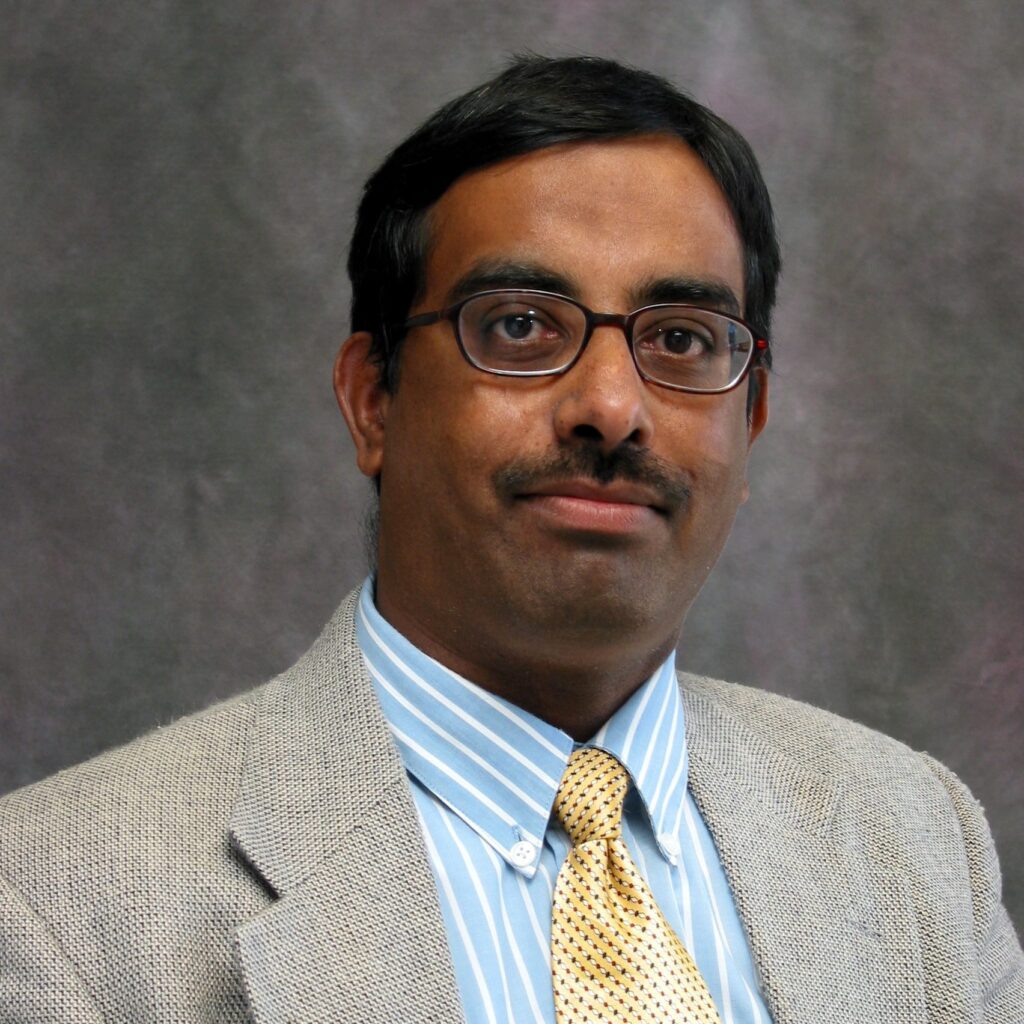

Brett Newman
Brett Newman is the VP of Customer Engagement & Marketing at Microway, a leading builder of hardware and software deployments for AI and HPC. He is part of a broad Microway team that designs and builds these full-stack deployments for research, governments, and industry. Brett has served many roles in AI and HPC — a cluster, server, and workstation architect for innumerable customers at Microway, as part of the IBM HPC group, and in product marketing focused solely on materials and resources with serious technical “street cred.”
Colorado State University AI Researcher Speakers
Click the drop-down menu for each speaker to view titles and abstracts for each presentation!
Aaron Baird; Computer Information Systems
Title: Building Blocks for Catalyzing Innovation with Agentic AI
Abstract:
Running more experiments often leads to more innovation, but deciding which experiments to run is difficult. Our research evaluates whether agentic AI could help identify experiment opportunities in health care. We propose that building fully agentic systems for experimentation is a risk, but the building blocks are available including clinical data, causal machine learning, and human-LLM collaboration. For instance, while causal ML methods such as causal forests and double machine learning can address observed confounding in observational data and estimate both average and heterogeneous treatment effects, they do not tell you what to do with those estimates. We demonstrate via two examples of how a human and an LLM can work together on this step to address this challenge, and establish a foundation for agentic AI being more autonomous in this area in the future. In the first example, we apply causal ML to about 625,000 substance use treatment discharges, and an LLM compares the resulting subgroup effects against the literature to flag anomalies, such as a smaller benefit of longer stays for self-referred, full-time employed patients in residential programs. In the second, we use treatment effects from stroke rehabilitation at Shepherd Center. The LLM explains the results, a clinician supplies context, and together they arrive at candidate changes to practice, such as sequencing care differently for patients with many comorbidities. In sum, we demonstrate how to apply causal ML and LLM workflows as the first steps toward using agentic AI in health care.
Tim Hansen; Electrical and Computer Engineering
Title: Applied AI for Power and Energy Systems: Research and Education
Abstract:
Artificial intelligence is creating new opportunities to model, predict, and control increasingly complex power and energy systems. This presentation will highlight ongoing research at Colorado State University applying AI to power-system dynamics and control, weather data imputation and forecasting, and interactions between wildfires and the electric grid. Together, these efforts illustrate how AI can complement physics-based models to improve the understanding and operation of energy systems under both normal and extreme conditions. The presentation will also briefly discuss CSU efforts to integrate applied AI into power and energy education through graduate and undergraduate curricula, including new coursework and certificate programs in Grid Modernization and Applied Engineering AI.
Ravi Mangal; Computer Science
Title: Explaining AI Model Behavior Through the Concepts in Its Internal Representations
Abstract:
When an AI model makes a decision, we want to know why, and whether it is relying on the right information. Explanations based on raw inputs, such as pixels or individual words, are often hard to interpret. However, a model’s internal representations encode high-level, human-understandable concepts, such as the presence of water in a satellite image or the sentiment of a sentence, and these concepts can be located and manipulated. In this talk, I will describe an approach that finds two kinds of minimal explanations by erasing concepts: editing the model’s internal representation so that it no longer encodes those concepts, while leaving the other concepts intact. The first kind of explanation is a minimal set of internally represented concepts that is enough on its own to produce the model’s output, even when every other concept is erased. The second is a minimal set of such concepts whose erasure changes the output. Many existing methods can only show that a concept is present when the model makes a decision. Our explanations are checked by erasing concepts and observing whether the model’s output changes, so they show that the concepts actually influence the decision. In recent work on image classifiers, a few short explanations of this kind covered most of a model’s predictions, including its mistakes. I will also outline how the same approach can explain the behavior of large language models.
Sangmi Pallickara; Computer Science
Title: Seeing the Unseen: Digital Twins for Understanding and Shaping Soil Futures
Abstract:
Accurate characterization of natural systems is fundamental to the sustainability of our planet. However, direct observations remain sparse across space and time, while environmental outcomes emerge from complex interactions among weather, topography, vegetation, management practices, and subsurface processes. Understanding not only what is happening today, but also what could happen under alternative decisions, remains one of the grand challenges in Earth system science. Digital twins offer a promising paradigm for continuously representing, forecasting, and exploring the future states of natural systems by integrating observational data, scientific knowledge, and computational models.
In this presentation, I introduce Soil Twin, a digital twin framework specifically designed for soil systems that combines geospatial observations, environmental sensing networks, remote sensing products, and machine learning approach. Soil Twin incorporates scientific principles governing water movement and soil–plant–atmosphere interactions while leveraging deep learning models to capture complex spatial and temporal patterns across heterogeneous landscapes. Soil Twin enables exploration of counterfactual scenarios at an unprecedented scale, allowing users to evaluate how alternative management actions, environmental conditions, or policy decisions may influence future soil states.
Soil Twin is currently used by scientists and practitioners in more than 42 countries and has been sponsored by the U.S. National Science Foundation and the National Institute of Food and Agriculture.
Shirin Panahi; Electrical and Computer Engineering
Title: When Dynamics Meet Deep Learning: Decision Geometry of Deep Neural Networks
Abstract:
Deep neural networks make decisions through a sequence of nonlinear transformations, but how decision boundaries and sensitivity develop across layers remains only partially understood. Recent work at Colorado State University examines deep classifiers from a dynamical-systems perspective, where network depth is treated as time and finite-time Lyapunov exponents are used to study how small input perturbations evolve through the network.
It is shown that the relationship between finite-time expansion and decision boundaries depends strongly on where the network is observed. At some layers, expansion can provide useful information about the decision boundary, while at others the relationship becomes more subtle and depends on the training objective and hidden representation. These results provide a new perspective on sensitivity in deep networks and motivate layer-aware approaches for improving robustness.
Krystle Reagan; Clinical Sciences
Title: From Data to Decisions: Harnessing Veterinary Clinical Data to Improve Patient Outcomes
Abstract:
Veterinary patients generate increasingly rich and complex clinical data, including electronic health records, laboratory results, diagnostic imaging, physiologic measurements, and longitudinal outcomes. Integrating these diverse data types creates an opportunity to move beyond retrospective description toward prediction—identifying disease earlier, supporting clinical decision making, and providing individualized prognostic information.
This presentation will highlight the use of multimodal clinical data and machine learning to generate patient-level insights across a range of veterinary diseases, including infectious and endocrine disorders. These projects demonstrate how data-driven approaches can facilitate earlier disease detection, inform clinical decisions, and ultimately enable more individualized patient care. Finally, we will explore how applying these data-intensive methodologies to naturally occurring diseases in veterinary patients may generate translational insights with relevance to human clinical medicine.
Zongjie Wang; Electrical and Computer Engineering
Title: AI-Enabled Grid Modernization, From Prediction to Intelligent Decision-Making
Abstract:
How can AI help us anticipate disruptions and make better decisions about the energy systems we depend on? This presentation highlights ongoing research within Colorado State University’s Grid Modernization Initiative that integrates AI with power grid modeling and optimization. Examples from U.S. DOE–sponsored research, including a newly awarded Genesis Mission project, span physics-informed forecasting and anomaly detection, AI-enabled digital twins for microgrids, machine learning for extreme-event and infrastructure risk assessment, and multi-agent reinforcement learning for coordinated energy-resource operation. As one application of AI-enabled risk assessment, vegetation-focused research integrates three-dimensional tree and infrastructure mapping with weather and historical outage data to predict tree-related outage risks and guide proactive vegetation management. These approaches combine data-driven intelligence with engineering models to support faster and more reliable decisions across applications ranging from vegetation management and wildfire resilience to islanded microgrids and emerging data-center loads. The presentation will also highlight opportunities for translating AI advances into deployable tools for utilities and energy-system operators.
Yinshuang Xiao; Systems Engineering
Title: Network-AI: Combining AI and Network Science to Engineer Complex Socio-Technical Systems
Abstract:
Complex socio-technical systems, such as workplaces, markets, power grids, and factories, are hard to engineer for two reasons: the human side is recorded in unstructured data and shaped by heterogeneous preferences, and system behavior emerges from interactions rather than from any single component. We propose Network-AI, a general framework that combines AI and network science to address both. The framework is a four-step loop: 1) Map: large language models (LLMs) convert unstructured data into structured networks of people, tasks, products, and assets. 2) Model: AI agents grounded in measured preferences and social ties stand in for real decision-makers. 3) Simulate: many agents interact over social, market, and physical networks. 4) Design: network metrics locate synchrony, bottlenecks, and concentrated risk, while models, policies, and team structures become design variables. We illustrate the framework with four applications. In the workplace, we map 1,250 professional interviews into networks of human–AI collaboration. In the car market, we test whether LLMs can model consumers well enough to predict the vehicle each of 2,277 surveyed buyers purchased. In the power grid, we model households that delegate energy decisions to AI agents and simulate when similar AI policies create “algorithmic monoculture” that overloads physical infrastructure. On the factory floor, we simulate teams of LLM-driven agents assembling products and study team design. Across these systems, the framework offers a common path from data to design for systems where humans and AI decide together
Panelists
- Mike Pritchard, Director of Climate Simulation Research (NVIDIA)
- CSU Faculty
- Jared Buckley, Solutions Architect (Microway)
Registration Forms
Registration is CLOSED for this event; we are at capacity!
Registered guests will receive an email with event details the week of the event. If you are unable to attend, please let us know ahead of time so we can add someone from the waitlist.
Please fill out the form below to be added to the waitlist. If a spot opens up, we will send you an email to let you know you are registered.
Waitlist Form
Poster Session Form
Please fill out the form linked below with basic information about the project you wish to present. Space is limited for the poster session and submissions will be screened ahead of the event. Please reach out to [email protected] with any questions.
Submission Deadline: 10/9
Selected posters will be notified the following week 10/12.
NVIDIA GPU Prize winner will be announced at the end of the main session at 2:30 10/23.